Why Chainsaws Became a Haunted House Staple
The Psychology of Sound-Based Terror
BackBone ENT
1/2/20263 min read
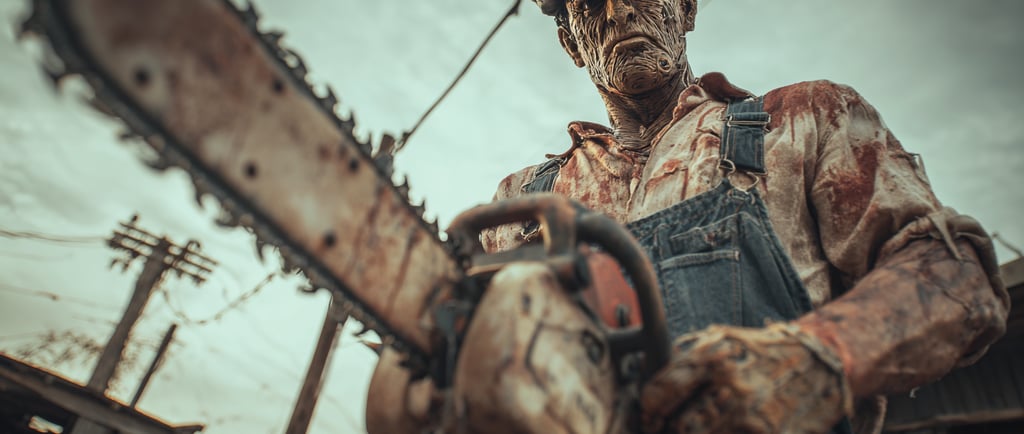
If you've ever been through a haunted house or outdoor haunted trail, you've heard it. That unmistakable roar that makes your heart drop before your brain even processes what's happening. The chainsaw has become as iconic to haunted attractions as fog machines and strobe lights, but have you ever wondered why?
The Sound That Stops You in Your Tracks
Chainsaws weren't introduced to haunted houses because they're historically accurate or even because they're particularly scary to look at. They became a staple because of one thing: sound
That mechanical growl triggers an instant panic response. Your body reacts before your mind can rationalize. Even though you know the chain has been removed, even though you're aware you're in a controlled environment, that sound cuts through every logical defense you've built up.
The human brain is wired to respond to certain sounds as threats. Chainsaws hit multiple fear triggers simultaneously:
Volume and Intensity- The chainsaw's roar is loud enough to be physically felt. It doesn't just enter your ears; it vibrates through your chest. This overwhelming sensory input floods your system and kicks your fight-or-flight response into overdrive.
Unpredictability- The revving engine creates an irregular pattern. Your brain can't predict when the next surge of sound will come, which keeps you in a constant state of alert. Predictable sounds allow us to relax. Chainsaws don't give us that option.
Cultural Association - Decades of horror movies have conditioned us to associate chainsaws with danger. From The Texas Chain Saw Massacre to countless films since, pop culture has taught us that this sound means something bad is about to happen. That learned fear is incredibly hard to override.
Here's what most people don't realize: your ears process threats faster than your eyes.
When you're walking through a dark haunted trail and you hear that chainsaw fire up behind you, your body is already flooding with adrenaline before you've even turned around. The sound has already done its job. By the time you see the actor, you're already terrified.
The sound creates the threat. The revving implies motion and intent. Your imagination fills in the rest. This is the brilliance of sound-based scares—they let your own mind do the heavy lifting.
Even with the chain removed and strict no-contact rules in place, guests still run. They still scream. They still feel genuine fear. Because the threat isn't about what could actually happen—it's about what your primal brain thinks could happen.
A chainsaw is most effective when it breaks silence. If you've been walking through a quiet section of a haunted trail, your nervous system is already on edge from anticipation. When that chainsaw suddenly roars to life, it's not just the sound that gets you—it's the violation of that tense quiet
This is why immersive horror experiences with live actors carefully choreograph when and where chainsaw scares happen. It's not random. It's designed to maximize that auditory assault and create peak moments of terror throughout your journey. There's a common misconception that haunted houses just try to be as loud as possible. But volume alone doesn't create fear—it just creates noise. A chainsaw scare without proper timing and context is just annoying. A well-executed chainsaw scare is pure terror.
Today's haunted attractions have access to sophisticated sound systems, animatronics, and special effects that didn't exist when chainsaws first became popular. Yet the chainsaw endures.
Why? Because it works. Some scare tactics become dated. Some lose their effectiveness as audiences become desensitized. But the chainsaw remains a reliable crowd-pleaser because it taps into something fundamental about how humans process fear.
At BackWoods Haunt, we've experimented with countless scare techniques over the years. High-tech effects, elaborate costuming, and carefully crafted storylines all have their place. But when we want a guaranteed reaction? When we want to send a group sprinting through the haunt? We fire up the chainsaw.
Frequently Asked Questions About Chainsaw Scare
Are the chainsaws at haunted houses real?
Yes, they're real chainsaws, but the chains are completely removed for safety. What remains is the sound and the psychological impact—which is all you need
Can actors touch you with chainsaws at haunted attractions?
No. Professional haunted attractions follow strict no-contact policies. The fear comes from the proximity and sound, not actual physical contact.
Why are chainsaw scares more effective outdoors?
In outdoor haunted trails, the natural environment amplifies sound unpredictably. You can't gauge distance or direction as easily, which heightens the panic response.
The next time you hear that distinctive roar echoing through the trees at BackWoods Haunt, remember: what you're experiencing isn't just a scare tactic. It's applied psychology. It's an understanding of how your brain processes threats, how sound bypasses logic, and how fear can be manufactured through carefully controlled chaos.
And knowing all of this won't help you when you hear it.
Join us when we rise from the dead in October 2026